
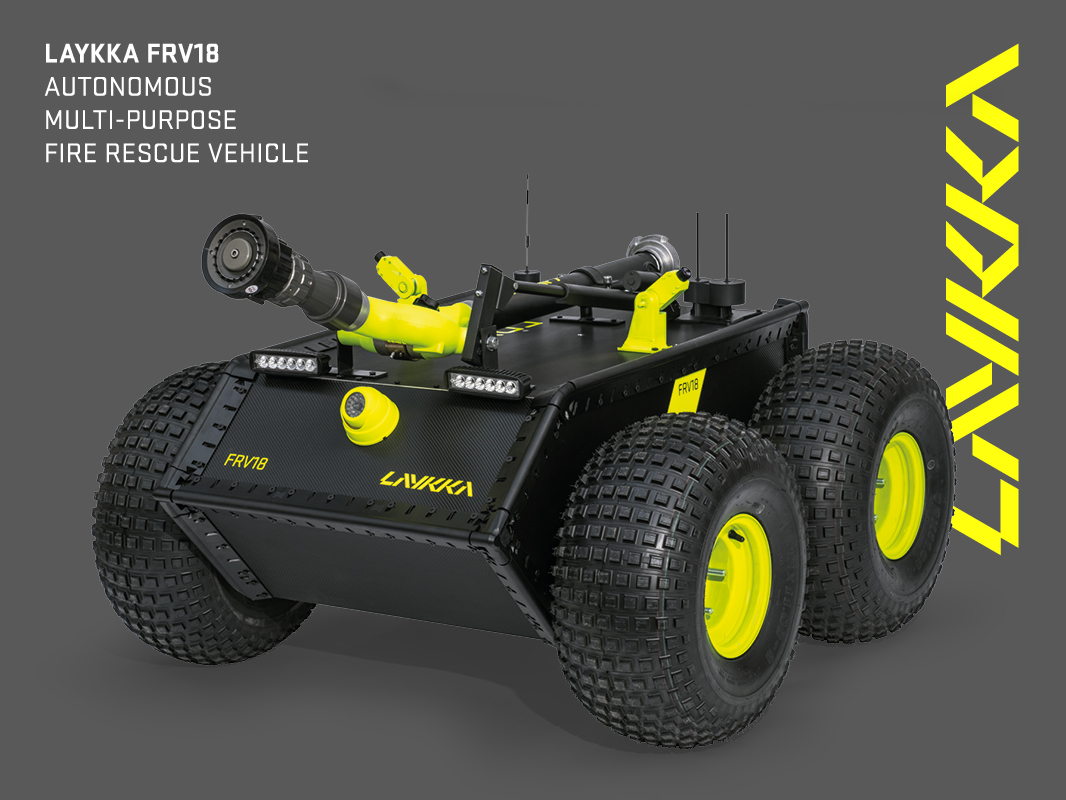
Laykka began in 2015 as a Master's thesis at Tampere University of Technology. Today it is in its third hull revision and built around an inkrementaalinen (incremental) development model.
Laykka started in 2015 as the diploma thesis of Christian Andersson at Tampere University of Technology (TTY). The original work, completed in 2018, produced the drawings, the component list, sizing calculations and CAD models that became the basis for Laykka X.1, the first physical demonstrator (Andersson, 2018).
Incremental development, not big-bang engineering
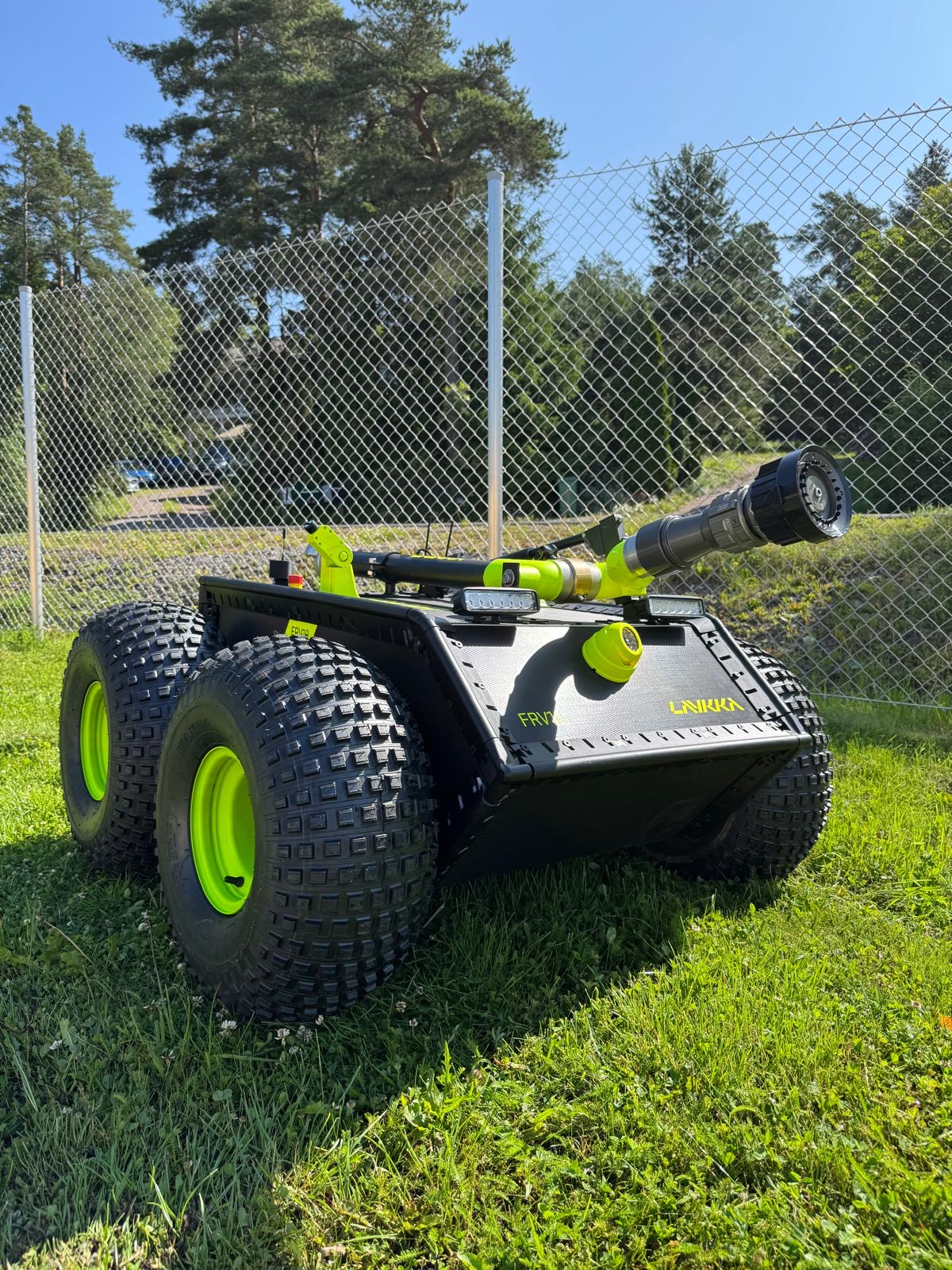
Laykka's development follows the inkrementaalinen kehitys (incremental development) model documented in the 2022 Master's thesis at the Finnish National Defence University. Each generation of the hull only progresses to the next stage when a defined set of minimum requirements has been met in the field.
This is deliberate. Laykka is meant to be expendable in some mission profiles, so the platform must be cheap, simple, modular and easy to use. Iterating in small, testable steps, and validating with field tests at the National Defence University, is a faster path to that goal than designing a fully-featured prototype on paper.
Built largely from commercial off-the-shelf parts
One of the more practical design decisions is that Laykka leans heavily on COTS (Commercial Off-The-Shelf) hardware. The compute core is a Raspberry Pi single-board computer. The cameras, microphones, motors and batteries are all standard catalogue parts. Even the wheels were sourced from a regular Finnish hardware store. The chassis itself is a straightforward aluminium, polycarbonate and ABS construction.
The novelty is not exotic hardware. It is putting a working autonomy stack onto an affordable, repairable, mass-producible platform. As Reserviläinen put it, there is nothing especially new and special in the technology, except of course the work of building a functioning whole and programming a learning AI for it.
Field tests and a public demonstration
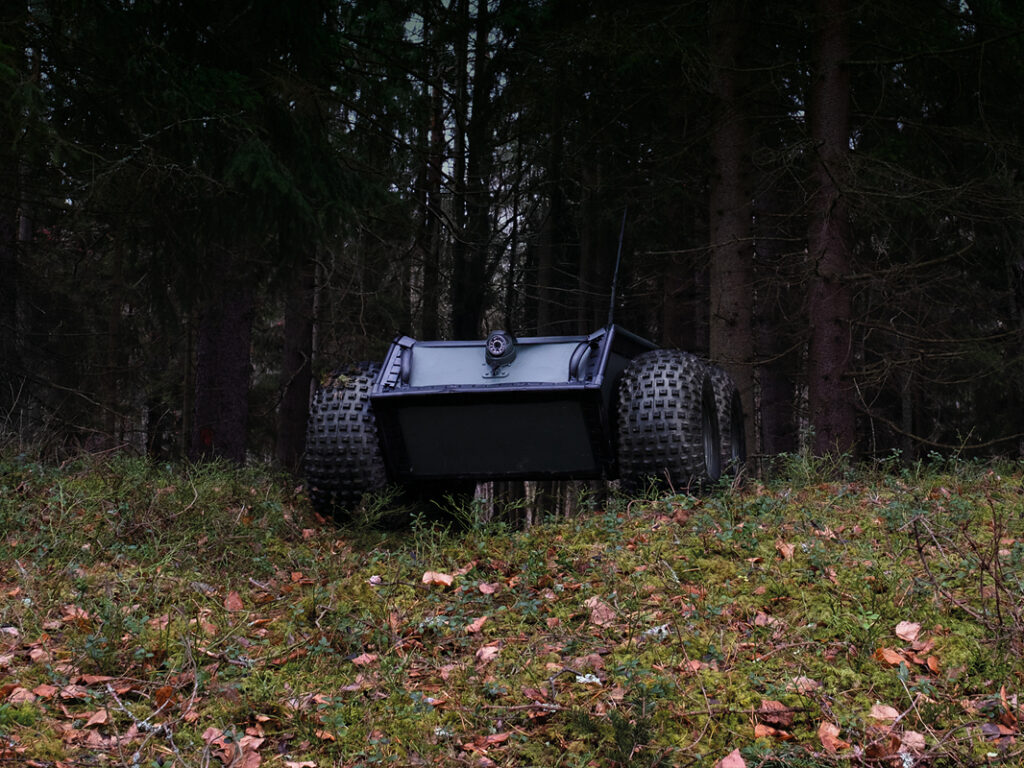
Between November 2020 and October 2021, the X.2 to X.3 transition was validated through three formal field tests, one field trial, and a demonstration at the Armoured Brigade Museum (Panssarimuseo) in Parola. According to the published thesis, Laykka X.3 met 83% of the mandatory performance requirements (against a 50% minimum target) and 62% of all requirements set by the project (Andersson, Doria, 2022).
Where it goes next
Laykka's development continues across two parallel doctoral studies, one focused on the platform itself and one on the AI that drives it. The X.3 hull is, in the team's own words, far from a fielded weapon, but it is a credible enough demonstrator to keep building on. The road from research project to industrial-scale production is still long, and Laykka's authors are open about that.
Sources
Christian Andersson, "Laykka-AMPGV:n inkrementaalinen kehitysprosessi runkoversio X.2:sta X.3:een sekä kehityksen seuranta kenttätesteillä ja -kokeella" (Maanpuolustuskorkeakoulu, March 2022), available at doria.fi. Reserviläinen: "Laykka testaa tekoälyä taistelussa" by Tero Tuominen.